

Whether it be food, fashion or life tips, the average person has the world at their literal fingertips. Social media exposes new customs and traditions to people who wouldn’t ordinarily know them– a scroll through your feed will easily surface an influencer talking about how they are “in a very Chinese time in their life” for making congee for breakfast.
Despite the light atmosphere the majority of the internet tends to foster around these trends, ethnic communities are growing upset, and rightfully so. Hundreds of years of tradition and meaning get simplified into the latest TikTok trend. Your beautiful Jhumkas, passed down from your mother and her mother before her, get launched at Paris Fashion Week as a cute “boho” accessory.
And here’s the thing: it is that deep. The internet’s exciting new trend of “becoming Chinese” involves the same people who mocked that very culture the minute it wasn’t trendy– the same people who teased their classmates for a cultural lunch, and people who fueled the rise of anti-Asian hate speech in 2020. So many people had to fight to exist in spaces of constant mockery, and with the repackaging of their traditions, they get erased from the picture as well.
In honor of that history, here are some iconic fashion classics and the stories behind them.
1. The Gold Hoops
The United States

Hoop earrings date as far back as 2600-2500 B.C.E., with early evidence tracing to Nubia, or modern-day Sudan, and by 1000 B.C.E, they had spread worldwide. In early 20th-century America, hoops carried a significant stigma, seen as a way of symbols of Native American and Latino culture, deterring many from wearing a pair. Yet, as updos grew in popularity, people desired earrings that made a statement, reviving the love for the hoops.
The earrings stayed popular through each decade of the 1900s, and were brought into the 2000s on the back of hip-hop and Latino culture. Hoops are for the bold, standing out much more than a discreet stud. For many immigrants and minorities, hoops were a symbol of identity and resistance to discrimination. Their circular shape has long signified unity and wholeness, making them one of fashion’s oldest surviving trends.
Thanks in large part to huge names like Beyoncé, Michelle Obama and Rihanna, big hoops remain a staple. They are paired with every style, from the ‘clean girl’ look to maximalist styles, worn across all kinds of communities.
2. The Qipao
China
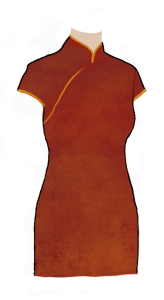
Originating from the Qing Dynasty (1644-1912), the qipao began as a loose-fitted garment worn by the Manchu people. However, the sleek, fitted dress we recognize today emerged from Shanghai in the 1920s, where Western media consumption and the May Fourth Movement, a massive anti-tradition uprising that sparked major reform in China, entirely transformed the garment. Combined with popular movie stars like Madame Wellington Koo adorning the new, high-slit, short qipao, it wasn’t long before the style became the next big thing for many Chinese women!
The qipao is defined by its long silhouette and a high collar. It’s available in hundreds of patterns and colors for occasions ranging from weddings, the workplace or daily wear. Today, the qipao is worn with pride by Chinese women across the globe in a deep red or brighter colors.
3. The Guayabera 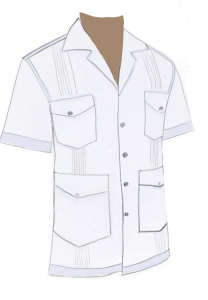
Cuba
The guayabera shirt originated in Cuba in the late 1800s and quickly became popular among Cuban men, visible across towns, and eventually became popular with American tourists visiting the island. Featuring a pleated front, four pockets and additional decorative detail that varies by brand, the guayabera has since become a go-to summer look across America for hot days and breezy style.
4. Cashmere Sweaters + Pashmina Shawls
Kashmir
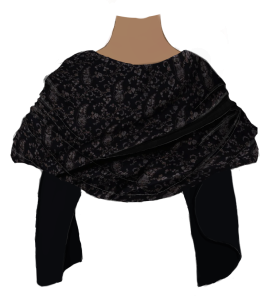
The word ‘cashmere’ began as an anglicized term to describe the shawls spun by Kashmiri craftsmen along the Silk Road. Made from the fine wool of the Central Asian cashmere goat’s underbelly. One goat could take an entire year to produce enough for a single scarf. The cashmere sweater was used for centuries in parts of central Asia as protection against harsh winters.
By the 18th century, these shawls were being exported to Europe, quickly becoming one of the most coveted fabrics on the market. They were mainly worn by wealthy upper-class women. Empress Josephine, the first wife of Napoleon of France, was said to have hundreds of Kashmiri shawls.
Now, cashmere is often blended with other fabrics, raising the value of pure cashmere to between $100 to $500 per item, while creating the illusion that cashmere is a common sweater fabric. The most affordable versions are fiber blends of cashmere, cotton and other materials.
The world may be at your fingertips, but so is the history of everything on your feed. The next time a cultural trend appears on your For You page, take thirty seconds to ask where it actually comes from, because everything starts somewhere.



1. Comments must have a verifiable first and last name and email address.
2. Comments may not bully, belittle, or make ad hominem attacks.
3. Comments may not purposefully distract from the subject at hand.
4. Comments may not be used to advertise.