

I’ve been part of the St. George’s community since pre-kindergarten and have always been surrounded by teachers and peers who told us that growth, individuality, and confidence make this school special. It’s a place meant to help us discover who we are, not just as students but as people.
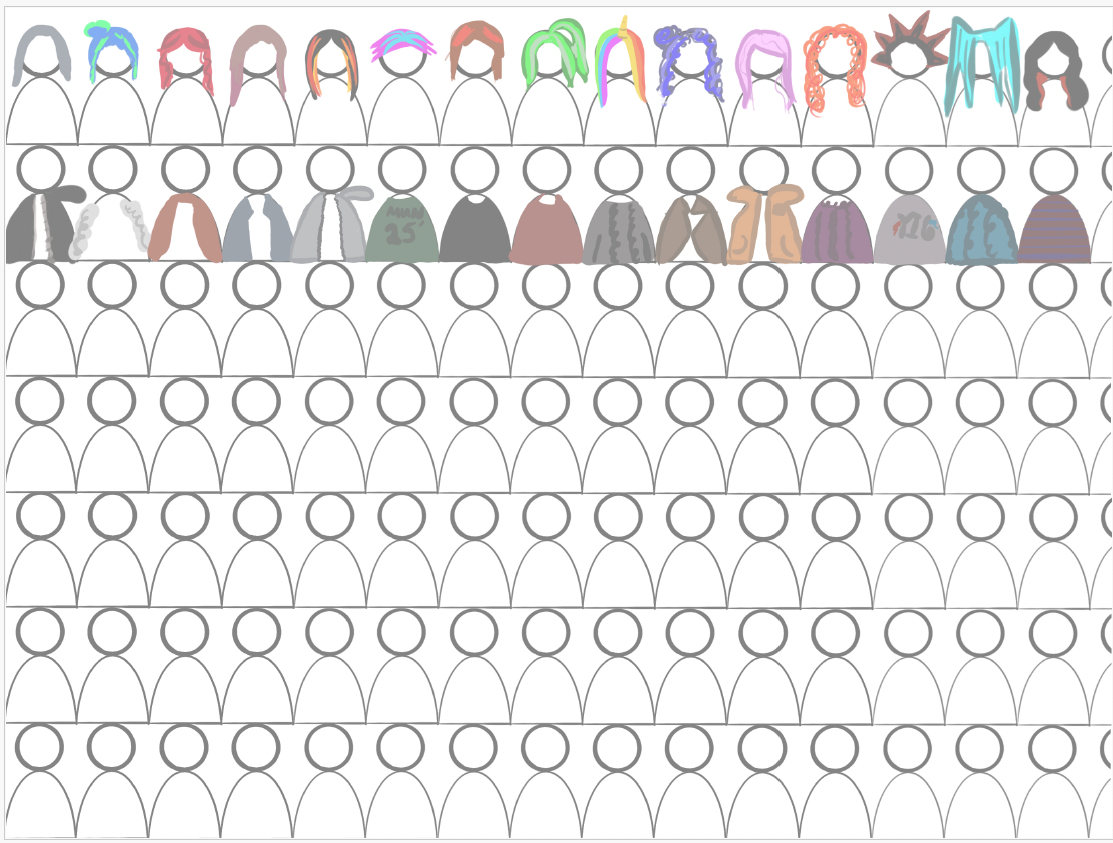
This year, new rules banning plain sweatshirts and colorful hair dye were introduced. Since then, that message feels harder to believe; the dress code sends the opposite signal: that how we look matters more than who we are.
Our school already requires uniforms, so it’s hard to understand why the new dress code changes are even necessary.
These changes don’t improve learning or discipline – they just make school feel stricter. Research shows no consistent evidence that stricter dress codes or uniforms improve academic performance, and one major review found no direct academic benefit at all.
According to the Government Accountability Office, about 44% of school dress-code policies allow schools to pull students out of class for minor violations, which usually just takes kids away from learning.
For many students, a simple hoodie isn’t just part of an outfit; it’s a small piece of individuality and well-being in a place where most things are already uniform.
Everyone has that one piece of clothing that defines their personal style, reminds them of home, or makes them feel secure on a tough day. Taking out the rule that allows you to wear that might feel like a minor rule to the administration, but it strips away one of the few ways students can express who they are.
School can often feel limiting, and adding more bans only makes it feel less personal and more disconnected from the very students it aims to support. What makes it worse is that the only sweatshirts we’re now allowed to wear are the expensive, official school ones.
Not every student can afford multiple school-branded hoodies, especially since they are priced higher than other uniform items, such as polos or skirts. The average sweatshirt in our school spirit shop is around $50-60, as compared to our $30 polos.
It’s unfair to make solace and compliance cost extra. This kind of rule doesn’t promote equality; it just highlights the gap between students who can afford to follow the dress code and those who can’t.
As stated on p. 17 of our student handbook, “Other outerwear during cooler months may be worn outside (only during transitions and recess).” We are allowed to wear coats outside, but as soon as we enter the building, we must take them off, no matter how cold it is, to avoid being dress-coded.
This is a problem when the building gets very cold during the winter months; inconsistent heating forces us to wear coats inside, so the only way not to be cold and humiliated is to buy the $60 sweatshirt.
Also, the new restriction on hair colors feels unnecessary and unfair. Specifically, the ban was put into place about 3 weeks into the school year, right after more students started coloring their hair. That timing makes it less discernible as a carefully planned policy and more like a reaction to students simply expressing themselves.
I have spent my entire life dyeing and bleaching my hair, a vibrant act of self-expression that allows me to embrace who I truly am. Changing my hair is, and should be, a choice; it’s a part of my identity and a statement of individuality. Having that taken away sends the message that individuality is to be controlled rather than celebrated, which goes entirely against the idea of a supportive school environment.
Instead of creating a calmer space, the dress code actually adds more stress to students’ daily lives. High school is already full of academic pressure, social expectations and personal challenges – the last thing students need is to worry about being punished for something as harmless as their hair color or a plain hoodie.
Constantly monitoring how you look just to avoid getting in trouble makes school feel tense instead of fostering the acceptance and confidence that St. George’s is supposed to promote.
What’s most frustrating is that these new rules were made without asking the people they actually affect, the students. The rule allowing our hair to be fun colors was only put in place last year, and as the administration changed this year, so did the rule.
We’re constantly told this school is like a family, built on communication and respect for our individuals, but this decision did not reflect that. It was sudden, and there has been a lack of student voice in our community lately, especially on things that directly affect us.
These new rules were made in reaction to students changing their hair, not with them and their opinions. If the goal is to create a community where everyone feels heard and supported, then students deserve a say in the policies that shape our daily lives.
At the end of the day, no one is asking to break rules or disrespect the uniform – we’re just asking to be seen as individuals. A sweatshirt or a streak of color in someone’s hair doesn’t affect anyone; it shows that we’re human, growing caring about being ourselves and not copying and pasting one another.
These new dress code rules take away from that. If this community truly stands for diversity, growth, and individuality, then it’s time to prove it by trusting us to show who we are, not hide it. If we can’t be trusted to express ourselves in a place that teaches acceptance, then what lesson are we really being taught?
That’s what real learning and real belonging looks like.




1. Comments must have a verifiable first and last name and email address.
2. Comments may not bully, belittle, or make ad hominem attacks.
3. Comments may not purposefully distract from the subject at hand.
4. Comments may not be used to advertise.