

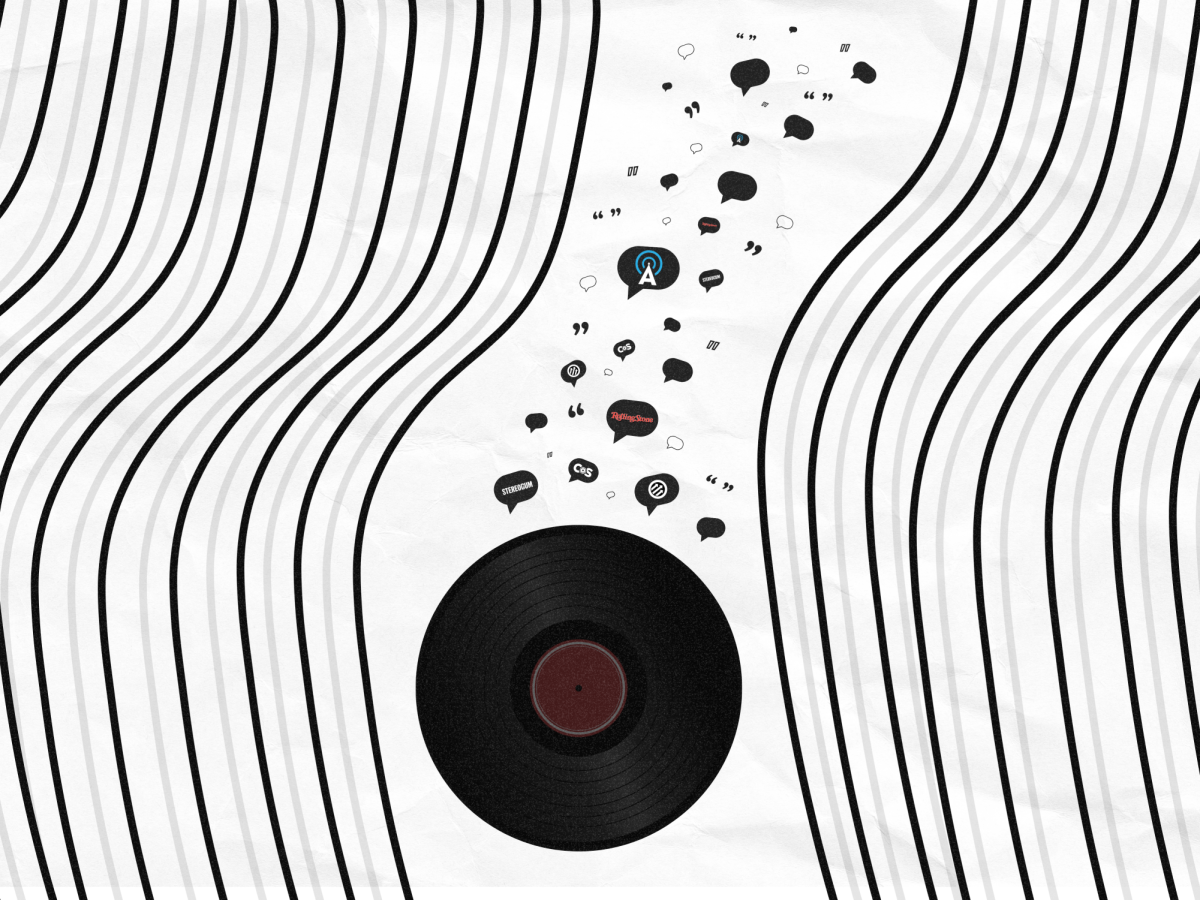
Do you think people will listen to your opinion? Music critics used to think so, but now that everyone can share their opinion online, their voices are often lost in the noise, leaving them scrambling for relevance. To remain relevant, many critics have turned to creating lists and publishing controversial reviews, hoping to spark debate, but these tactics ultimately discredit them.
Before streaming services, music had to be bought up-front. Customers wanted to know if they were paying for high-quality music before purchasing CDs or vinyl, so they would often seek music critics’ opinions. In this time, the critic’s voice carried weight, and their evaluation often determined an album’s sales and reception.
When I first started getting into music, I would seek these reviews to expand my music taste and discover new albums. Although they were useful initially, as I developed my own opinions, I found myself turning to the opinions of individuals over critics. To me, they had more varied, opinionated tastes and often covered albums not reviewed by larger sites.
With the rise of music streaming and social media, anyone can form and project their opinion on art. A role that previously belonged to the few is now one for the masses.
When everyone has equal access to spread their opinion, what use does a critic have? This has been the primary issue faced by music reviewers over the past decade, and they’ve adapted their work, which is now noticed less for its previous merits and more for its controversial takes, almost meant to stir up discussion.
Take, for example, Pitchfork’s recent list of the best rap albums of all time published in September 2025. The list gained notoriety within the past few months for the controversial picks, ranking landmark and critically acclaimed albums in the genre below even worse albums.
Pitchfork even contradicted itself, giving “400 Degreez” by Juvenile a lower rating than “Illmatic” by Nas, yet ranking it higher on the list. This is just one of the many examples of music reviewers creating lists to reach an audience they once had, only to end up ridiculed by that same audience.
To remain credible and regain the image they once held, these reviewers must focus on producing quality reviews again. Instead of creating lists, they need to reshape how they interact with critique, relearning to voice their own opinions and stand out from the crowd without publishing ridiculous or contradictory takes.
Music critics once assumed their voices were the most important in the discussion, and when people stopped listening, some thought they needed to spew nonsense to gain attention. Despite remaining the largest and most popular review groups, critics often find themselves outnumbered or in opposition to the popular opinion.
In reality, all they need to do is create strong reviews that don’t undermine the importance of the music they are reviewing. Critics can once again become as important to everyone as they once were, but until then, they need to work to reestablish their legitimacy.






1. Comments must have a verifiable first and last name and email address.
2. Comments may not bully, belittle, or make ad hominem attacks.
3. Comments may not purposefully distract from the subject at hand.
4. Comments may not be used to advertise.